Creating a podcast is only half the job. If it's only available on one platform, you're reaching a fraction of your potential audience. The global podcast listener base has reached 584.1 million people — and they're spread across Spotify, Apple Podcasts, YouTube, Amazon Music, iHeart, TikTok, LinkedIn, and dozens of smaller apps. This guide explains how podcast distribution works, breaks down every major platform, and shows you how to publish everywhere simultaneously without the manual work.
What Is Podcast Distribution?
Podcast distribution is the infrastructure layer that connects your audio files to the apps and platforms where listeners consume podcasts. When you finish recording and editing an episode, it exists as an audio file (MP3 or WAV) on a server somewhere. Distribution is the process of making that file — and all the metadata around it (title, description, artwork, guest info) — available to every platform where people listen to podcasts.
Distribution is not promotion. It doesn't get people to find your podcast — that's marketing and SEO. Distribution gets your podcast into the catalog of every major platform so that when someone does search for your show, finds you through a recommendation, or follows a link to an episode, they can listen regardless of which app they use.
The foundation of podcast distribution is the RSS feed — a standardized XML file that platforms subscribe to. But in 2026, the distribution landscape also includes direct video publishing to YouTube, short-form clip distribution to TikTok and Instagram, and professional content to LinkedIn.
The Major Podcast Platforms in 2026
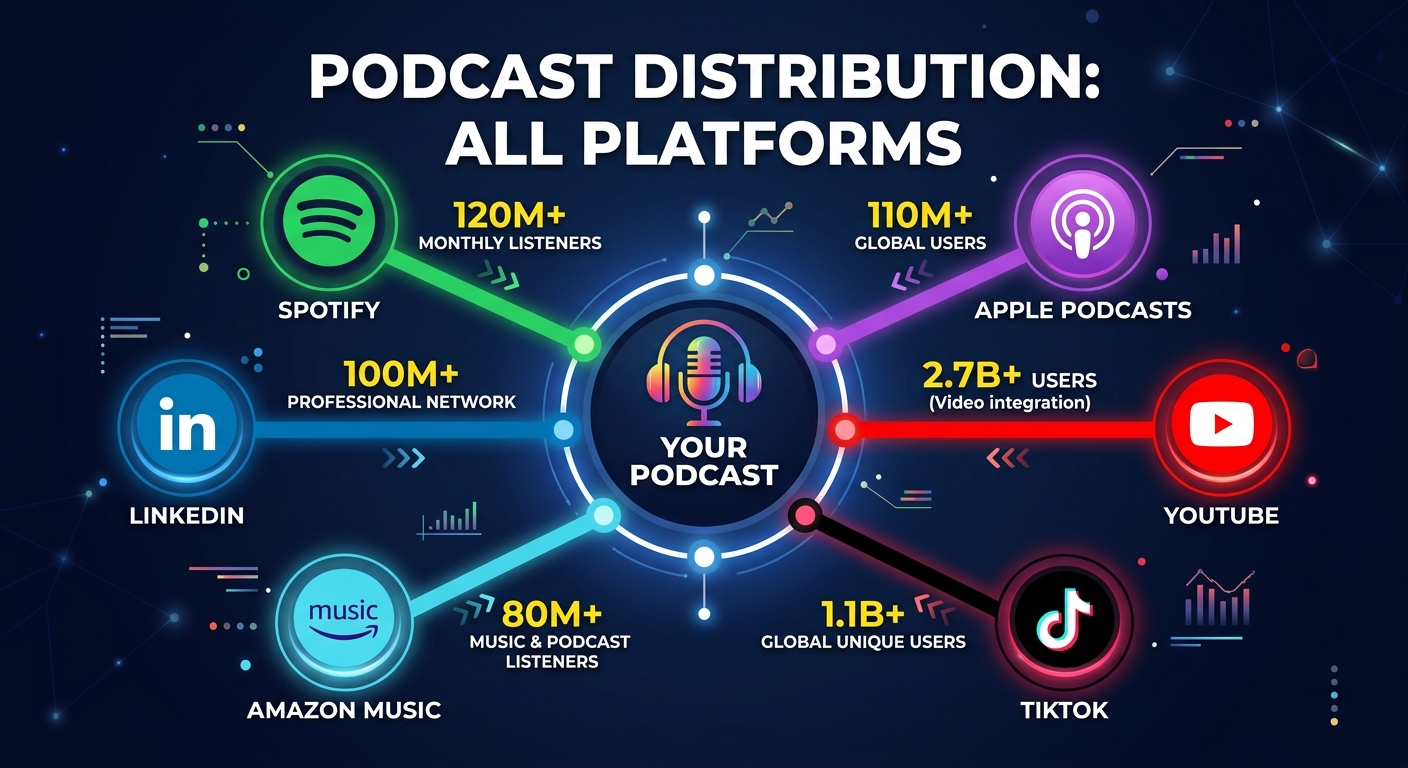
Here is a platform-by-platform breakdown of where podcast listeners are and what each platform requires:
| Platform | Monthly Active Users | Key Demographic | Distribution Method | Discovery Potential |
|---|---|---|---|---|
| Spotify | 640M+ (music + podcasts) | 18–34, global | RSS or Spotify for Podcasters | Very High — algorithmic recommendations |
| Apple Podcasts | 500M+ app installs, ~28% podcast share | 35–54, English-language, higher income | RSS via Apple Podcast Connect | High — New & Noteworthy, charts |
| YouTube | 2.7B monthly users; #1 platform for 18–34 podcast listening | All ages, highest 18–34 | RSS or direct video upload | Very High — search engine + algorithm |
| Amazon Music / Audible | 55M+ Prime users with podcast access | 35–54, higher income | RSS via Amazon | Medium — Alexa/Echo discovery |
| iHeart Radio | 150M registered users | 25–54, U.S.-focused | RSS via iHeart Podcast Studio | Medium — radio-adjacent recommendations |
| TikTok | 1B+ monthly users | 16–30, global | Short-form video clips (9:16) | Very High — viral discovery |
| 1B+ members | 25–55, professionals, B2B | Audio events or video clips | Medium — professional network sharing | |
| Pocket Casts | ~2M active users | Tech-savvy, engaged listeners | RSS (automatic crawling) | Low — small but highly engaged audience |
"YouTube has overtaken Spotify as the most-used platform for podcast listening among Americans aged 18–34. Creators who publish only to audio directories are missing the single largest and fastest-growing podcast audience segment."
— Edison Research, Infinite Dial 2025
Two Distribution Methods: RSS vs. Direct Publishing
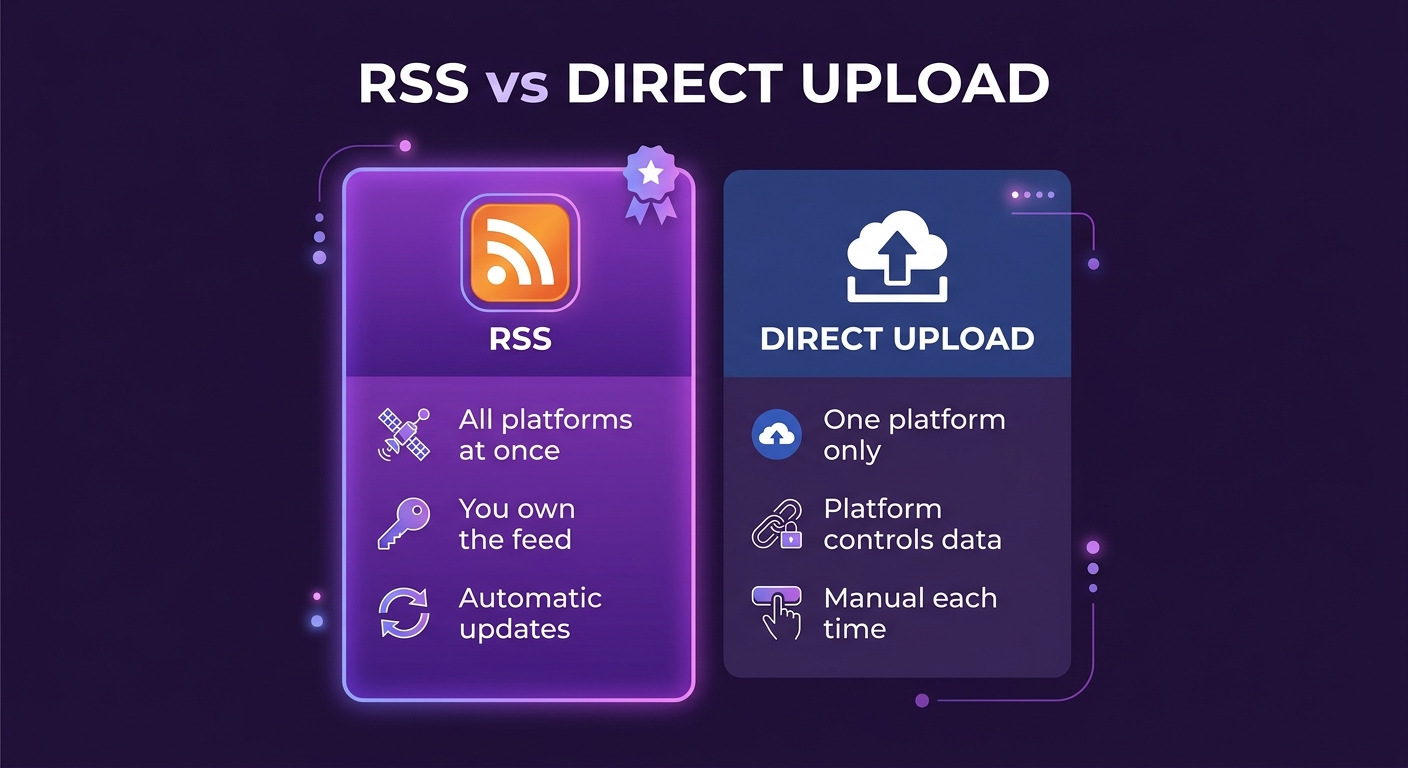
All podcast distribution falls into one of two methods. Understanding the difference determines your distribution strategy:
Method 1: RSS-Based Distribution (Recommended)
Your podcast hosting platform generates an RSS feed — a public XML file listing all your episodes. You submit this feed URL once to each directory (Spotify, Apple, Amazon, iHeart). From that point forward, every new episode you publish is automatically fetched by every platform. You upload once; all platforms update automatically.
Advantages:
- Publish once, distribute everywhere simultaneously
- You own your feed — if you change hosts, all subscribers follow
- Episode metadata (title, description, artwork) is consistent across all platforms
- Reach all platforms including those you haven't manually set up yet (many smaller apps crawl RSS automatically)
Method 2: Direct Upload to Individual Platforms
Some platforms — primarily YouTube for video podcasts — require or allow direct file upload rather than RSS ingestion. You upload the audio or video file to each platform separately and fill in metadata manually for each one.
When to use direct upload:
- YouTube — for video podcast episodes or YouTube Shorts clips derived from your episode
- TikTok — for 60-second to 3-minute short-form video clips from your episode
- Instagram Reels — for short-form visual clips
- LinkedIn — for professional clips or audio events
The ideal distribution strategy combines both: RSS for all audio podcast directories, plus direct video uploads to YouTube, TikTok, Instagram, and LinkedIn. This is exactly what PodGorilla handles in a single workflow — one episode generation produces the RSS-distributed audio, a YouTube video, and social clips simultaneously.
How to Submit Your Podcast to Each Major Platform
Here is a condensed submission guide for the four most important platforms:
Spotify
Go to Spotify for Podcasters, sign in, and add your RSS feed URL. Spotify will validate the feed and typically approve your show within 24–48 hours. Once approved, new episodes appear automatically within 1–4 hours of publication. For a detailed walkthrough, see our guide: how to publish your podcast to Spotify.
Apple Podcasts
Submit your RSS feed at Apple Podcast Connect. The review process takes 1–5 business days. Apple requires: HTTPS feed URL, cover art between 1400×1400 and 3000×3000px, and a valid itunes:category tag. Once approved, your show appears in Apple Podcasts globally.
Amazon Music / Audible
Submit through Amazon Music for Podcasters. The process mirrors Spotify — submit your RSS URL, verify ownership, wait for approval (typically 24–72 hours). Approved podcasts appear on Amazon Music and are available via Alexa on Echo devices.
iHeart Radio
Submit through iHeart Podcast Studio. Approval typically takes 3–7 business days. iHeart is particularly valuable for reaching the 25–54 American audience that overlaps heavily with traditional radio listeners.
The Discoverability Math: Why Submitting Everywhere Matters
Podcast listener market share is fragmented. According to Edison Research's Share of Ear study, no single platform commands more than 30% of podcast listening time. Here's what that means for your reach:
| Platforms Available On | Estimated % of Podcast Audience Reachable |
|---|---|
| Spotify only | ~29% |
| Apple Podcasts only | ~24% |
| YouTube only | ~33% (18–34 demographic, higher) |
| Spotify + Apple Podcasts | ~48% |
| Spotify + Apple + YouTube | ~67% |
| Spotify + Apple + YouTube + Amazon + iHeart | ~82% |
| All 6 platforms + TikTok clips + LinkedIn | ~90%+ |
The conclusion is clear: being on one or two platforms leaves the majority of your potential audience unable to find you in their preferred app. Each additional platform is incremental reach with zero additional production effort when you use an RSS-based workflow.
How PodGorilla Publishes to 6 Platforms at Once
PodGorilla's publishing workflow eliminates manual distribution entirely. When you finish generating an episode, a single "Publish" action:
- Generates and updates your RSS feed with the new episode
- Triggers submission to Spotify, Apple Podcasts, Amazon Music, and iHeart via your connected feed
- Uploads a 16:9 video version directly to your connected YouTube channel
- Uploads a 9:16 video clip to your connected TikTok account
- Publishes a professional post with audio/video to LinkedIn
- Posts a 9:16 Reel to your connected Instagram account
The entire workflow — from content input to published on all platforms — takes under 10 minutes. For creators publishing weekly episodes, that's the difference between 6+ hours of production and distribution work per month, and 40 minutes.
You can explore all distribution features on the PodGorilla features page. If you're new to podcast creation, also see: how to start a podcast without recording and our full podcast statistics for 2026. Start for $1 →
Frequently Asked Questions
What is podcast distribution?
Podcast distribution is the process of making your podcast available on all major listening platforms — Spotify, Apple Podcasts, YouTube, Amazon Music, iHeart, TikTok, and others. It works primarily through RSS feed submission, where platforms subscribe to your feed URL and automatically receive new episodes whenever you publish. The goal is to reach listeners on whatever platform they already use.
Which podcast platforms should I submit to?
At minimum: Spotify, Apple Podcasts, YouTube, and Amazon Music. These four platforms collectively reach over 80% of podcast listeners. Adding iHeart expands your reach further, especially with American audiences. For video and social discovery, TikTok clips and LinkedIn posts are increasingly important growth channels. PodGorilla publishes to all of these in a single step.
How long does it take for a podcast to appear on Spotify after submission?
Spotify typically approves new podcast submissions within 24–48 hours. Subsequent episodes published to an already-approved feed appear on Spotify within 1–4 hours of publication. Apple Podcasts takes longer for initial approval — 1 to 5 business days — but new episodes on an approved show appear within a few hours.
Can I distribute my podcast for free?
Submitting to Spotify, Apple Podcasts, Amazon Music, and iHeart is free. The cost comes from podcast hosting — storing your audio files and generating your RSS feed. Most hosting platforms charge $5–$20/month. AI podcast platforms like PodGorilla include hosting and distribution as part of the subscription, so there's no separate hosting cost.
What is an RSS feed and do I need one?
An RSS feed is a standardized XML file that podcast directories subscribe to in order to receive your episodes automatically. Yes, you need one for audio podcast distribution. Your podcast hosting platform or AI podcast platform generates this file for you automatically — you don't need to create or manage XML manually. See our full explainer: what is a podcast RSS feed.
Is YouTube a good platform for podcasts?
Yes — and increasingly, it's the most important platform for reaching young audiences. Edison Research's Infinite Dial 2025 found that YouTube is the #1 podcast platform for Americans aged 18–34, surpassing Spotify. Podcasters who publish video versions of episodes to YouTube have access to the world's second-largest search engine and a powerful recommendation algorithm that audio-only directories cannot match.