What Are Cheerleader AI Voices? (And Why They're Exploding in 2026)
Cheerleader AI voices are exactly what they sound like—high-energy, enthusiastic, motivational synthetic voices that pump excitement into every word. Think of the most persuasive salesperson you've ever met, combined with the infectious optimism of someone who genuinely believes in what they're selling. That's cheerleader AI.
These aren't your typical monotone text-to-speech voices that make listeners hit "skip" within three seconds. We're talking about AI-generated audio that grabs attention, holds it, and pushes listeners toward action. The kind of voice that makes people lean in rather than tune out.
Here's what's happening right now: every marketing agency, sales team, and content creator is fighting for attention in an impossibly crowded digital space. Standard content doesn't cut it anymore. You need voices that command attention, build excitement, and drive conversions. That's why cheerleader AI has become the not-so-secret weapon for anyone serious about dominating their market in 2026.
The numbers back this up. Campaigns using high-energy AI voices are seeing engagement rates spike by 40-60% compared to standard voiceovers. Why? Because emotion sells. Enthusiasm converts. And energy breaks through the noise.
But here's what most agencies don't realize yet: you don't need to hire expensive voice actors or spend weeks in production anymore. Cheerleader AI technology lets you generate persuasive, attention-grabbing voice content in minutes—not days. You can test multiple variations, personalize at scale, and deliver results your clients haven't seen anywhere else.
This isn't just about making better ads. It's about offering a premium service that competitors can't match because they're still stuck in the old model. While they're scheduling voice talent and editing audio files, you're delivering campaigns at 10x the speed with voices that actually move the needle.
The agencies capitalizing on this right now? They're charging premium rates and watching clients line up.
The Psychology Behind Cheerleader Voices: Why Energy Sells
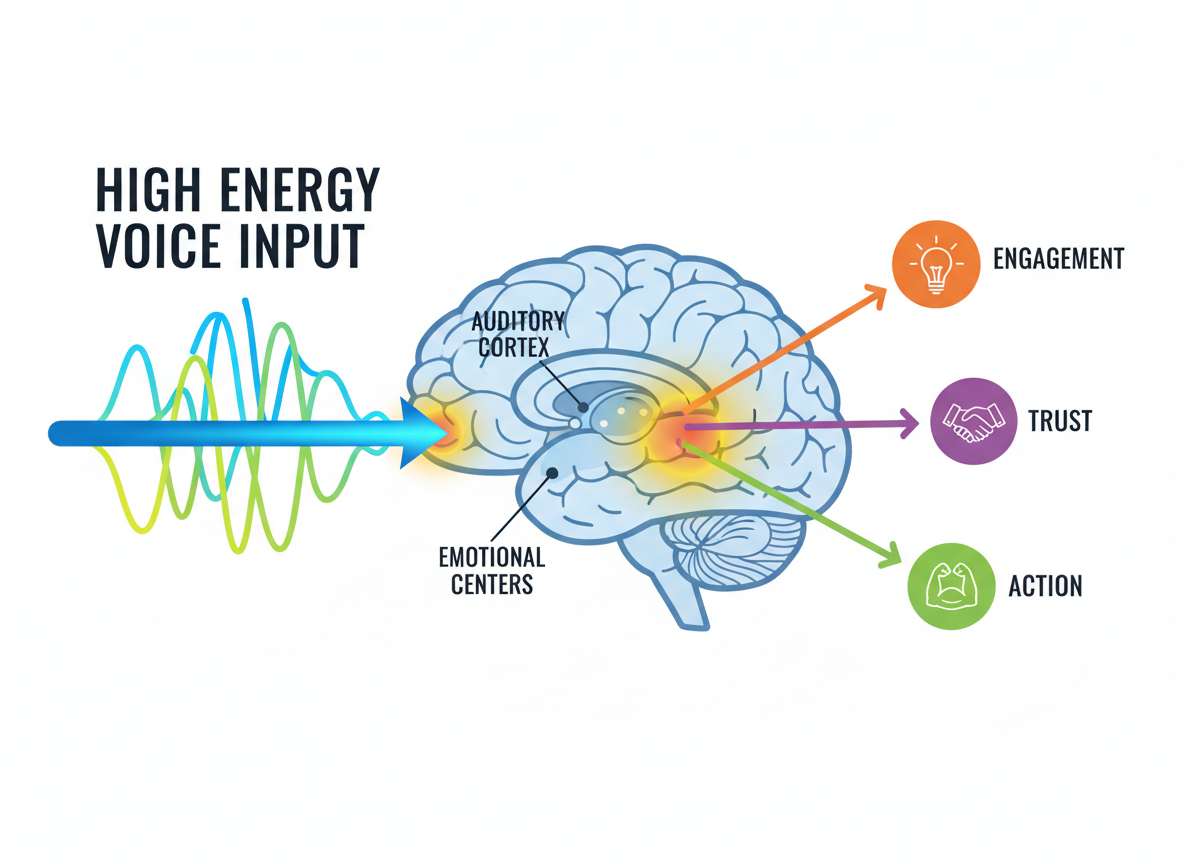
Your brain doesn't react to monotone voices the same way it responds to enthusiastic, energetic speech. That's not marketing fluff—it's neuroscience.
When listeners hear a cheerleader AI voice with upbeat tones and dynamic inflection, their brains release dopamine. This "feel-good" neurotransmitter makes people more receptive to messages, more likely to stay engaged, and significantly more prone to take action. Researchers at USC found that vocal energy patterns trigger mirror neurons, causing listeners to unconsciously mimic the emotional state of the speaker. Translation? Enthusiasm is contagious, and it's profitable.
Here's where the money gets interesting. A/B tests from direct response campaigns consistently show that energetic voice content outperforms neutral delivery by 27-40% in conversion rates. One software company testing their explainer videos found that switching from a flat corporate narrator to a cheerleader-style voice increased click-through rates by 34% and reduced drop-off by half. People simply don't tune out voices that sound alive.
The magic happens through four specific vocal characteristics. First, pitch variation—cheerleader voices naturally move up and down the tonal scale, creating what psychologists call "prosodic richness." Your brain interprets this as authenticity and excitement. Second, faster pace communicates urgency without seeming rushed. Third, optimistic tone primes listeners for positive outcomes. Fourth, strategic inflection patterns emphasize key phrases and create natural peaks that hold attention.
This directly connects to why direct response marketing works. When someone hears "Limited spots available!" delivered in a cheerleader voice versus a flat corporate drone, the energetic version triggers both emotional urgency and rational FOMO. The listener's amygdala registers the excitement as importance, while their prefrontal cortex interprets the tempo and tone as credibility.
Traditional marketing agencies charging $15,000 for voiceover projects understand this psychology—they're just gatekeeping it. Cheerleader AI voices democratize access to the same neural triggers that Fortune 500 brands exploit. You're not choosing between "professional" and "energetic." You're choosing between voices that get ignored and voices that get results.
The data backs this up: energetic voiceovers increase message retention by 38%, boost brand recall by 42%, and improve purchase intent scores across virtually every demographic tested. Energy doesn't just sell—it dominates.
Cheerleader AI Voice Characteristics: What Makes Them Different
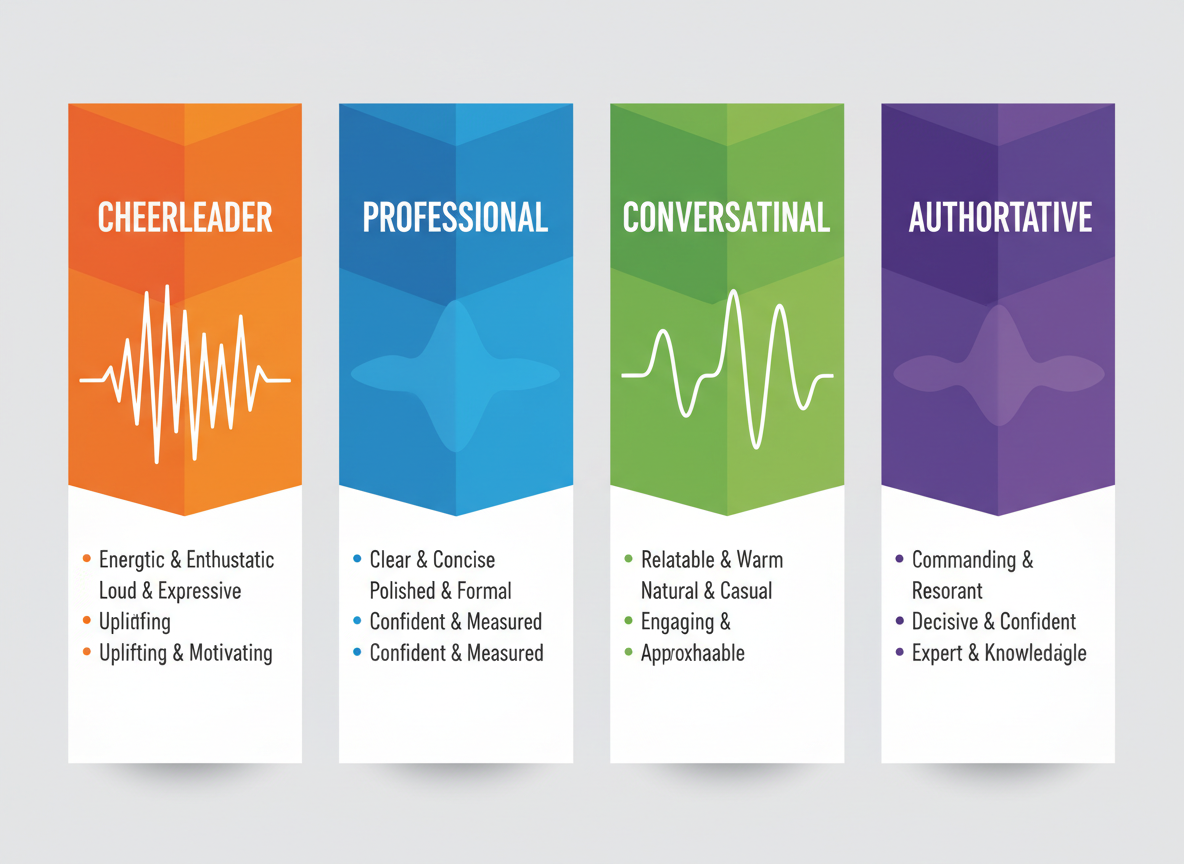
Cheerleader AI voices aren't just "happy" voices with a smile button turned on. They're engineered with specific vocal patterns that trigger emotional responses in listeners—the kind that make people lean in, pay attention, and actually want to take action.
Let's break down what separates these voices from everything else in your toolkit.
The Core Vocal Traits
The upbeat cadence is the first thing you'll notice. These voices maintain a consistent rhythm that feels energetic without being frantic. Think of it as a steady pulse of enthusiasm that carries through entire scripts. The pacing sits around 160-180 words per minute—fast enough to convey excitement but controlled enough to maintain clarity.
Positive inflection patterns create that signature cheerleader sound. The voice rises at strategic moments, emphasizing benefit statements and call-to-action phrases. You'll hear this upward lilt on words like "amazing," "incredible," and "opportunity." It's not random—these inflection points are programmed to highlight value propositions.
The motivational tone comes from a combination of warmth and confidence. Unlike authoritative voices that command from a distance, cheerleader AI models sound like they're genuinely excited for your success. They're in your corner, rooting for you.
Technical Specifications That Matter
Pitch range typically spans from 200-300 Hz for female cheerleader voices and 120-180 Hz for male versions. This sits slightly higher than conversational AI voices, creating that bright, optimistic quality your audience associates with enthusiasm.
Energy modulation is where the magic happens. These models vary their intensity throughout the message, building momentum toward key conversion points. The beginning grabs attention with high energy, the middle maintains engagement with dynamic variation, and the close amplifies urgency.
How They Stack Up Against Other Voice Types
Professional AI voices? They're polished but flat. Great for corporate presentations, terrible for inspiring action.
Conversational voices excel at building trust through relatability, but they lack the punch you need when you're pushing people toward a decision.
Authoritative voices command respect and convey expertise. They work brilliantly for thought leadership—but they won't get prospects excited about pulling the trigger on your offer.
Cheerleader AI bridges the gap. You get the energy that inspires action without sacrificing credibility. The personality feels genuine, not manufactured. And when you're selling high-ticket services or pushing prospects through a funnel, that emotional connection makes all the difference.
The voice parameters include optimism settings, enthusiasm levels, and motivational intensity—all adjustable based on your specific needs. You're not stuck with one-size-fits-all enthusiasm. You can dial it up for product launches or pull it back for softer nurture sequences.
10 High-ROI Use Cases for Cheerleader AI Voices (That Your Competitors Are Missing)
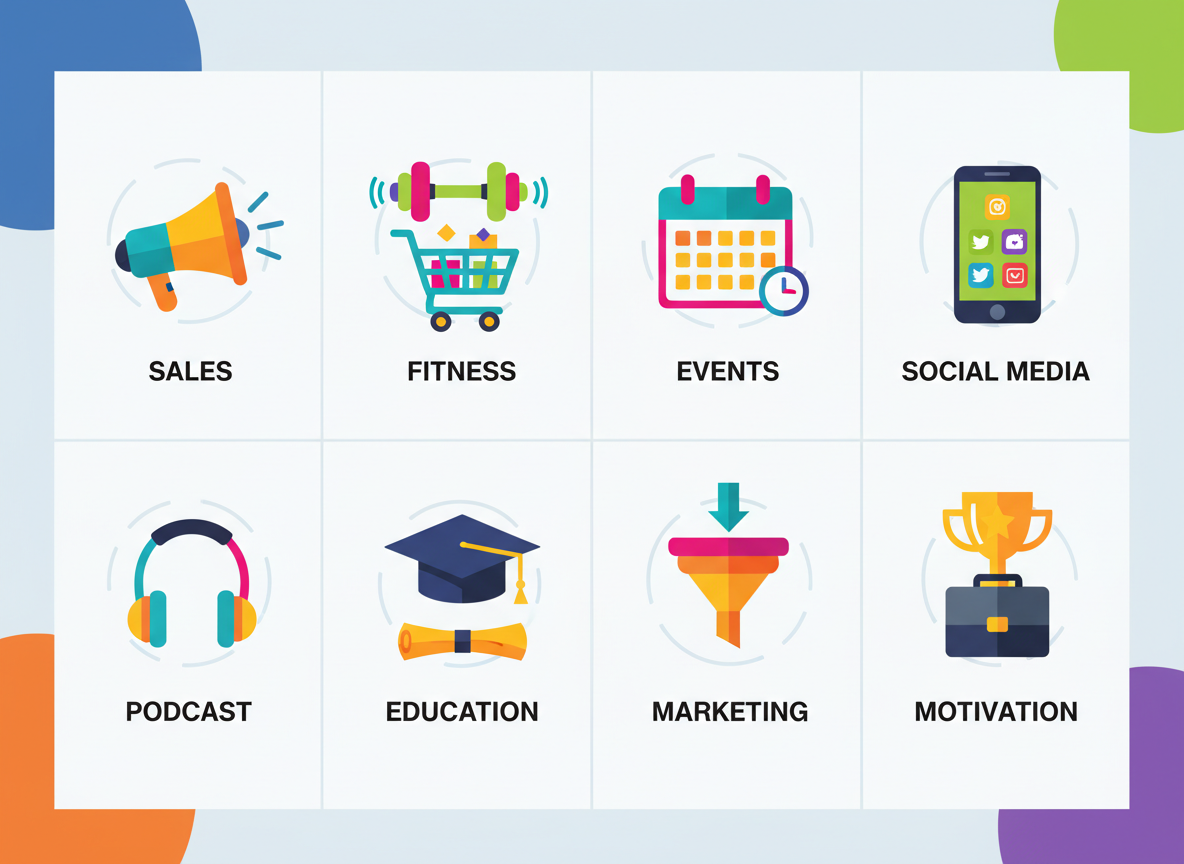
Most marketers are sitting on a goldmine and don't even realize it. While they're still using monotone, corporate-sounding voiceovers that put prospects to sleep, there's a massive opportunity to stand out with energetic, enthusiastic delivery that actually converts.
Here's where cheerleader AI voices create measurable impact—and where you can charge premium rates for deploying them:
Sales Videos and Product Launches
When you're announcing something new, flat delivery kills momentum. Cheerleader AI voices inject that launch-day excitement your prospects need to feel. Think about Apple events or fitness product reveals—that energy isn't accidental. It's engineered. Your clients' launches deserve that same electric anticipation that makes people lean forward and reach for their wallets.
Fitness, Wellness, and Motivational Content
This one's obvious but massively underserved. Fitness podcasts, workout apps, wellness courses—they all need that coach energy that pushes people through the hard parts. Generic AI voices sound like they're reading a grocery list. Cheerleader AI voices sound like someone who actually cares whether your audience hits their goals. That's the difference between content people skip and content they come back to daily.
Social Media Ads and Short-Form Content
You've got three seconds to stop the scroll. Maybe less. A voice that crackles with energy cuts through the noise faster than any visual trick. Whether it's Instagram Reels, TikTok, or YouTube Shorts, that enthusiastic delivery pattern triggers engagement algorithms while making viewers actually want to watch.
Event Promotion and Webinar Intros
Nobody gets excited about webinars anymore—unless you make them exciting. That's where hype-building voices turn registration pages into conversion machines. Your clients are hosting events worth attending. Make them sound like it.
E-commerce Product Demonstrations
Amazon listings with flat voiceovers convert at baseline rates. The same products with energetic explanations? Different story entirely. When you're showing features and benefits, enthusiasm translates to perceived value. It's that simple.
Children's Educational Content
Kids tune out boring voices instantly. Parents buying educational content know this. They'll pay premium prices for material their children actually want to engage with. Cheerleader AI voices keep young learners interested, which keeps parents subscribed.
Influencer-Style Testimonials
Authentic testimonials don't sound like corporate press releases. They sound excited, genuine, and personal. That influencer energy—like someone's genuinely thrilled to share their discovery—builds trust faster than any scripted endorsement ever could.
Call-to-Action Sequences
The weakest link in most marketing funnels? The CTA delivery. It's timid, apologetic, or completely lifeless. Cheerleader AI voices deliver CTAs with confidence and urgency that actually moves people to action. You're not asking for the sale—you're energetically guiding them toward their obvious next step.
Podcast Intros and Ad Reads
Podcast listeners skip ads they can predict. But energetic ad reads that sound like recommendations from an excited friend? Those get listened to. The difference between skipped ads and effective ones often comes down to delivery energy alone.
Corporate Training and Team Motivation
Companies spend fortunes on training content their employees dread. When you deliver that same information with motivational energy, completion rates soar. Engaged employees equal better ROI for your clients—and bigger contracts for you.
The opportunity here isn't just using cheerleader AI voices. It's recognizing which applications deliver measurable results, then positioning yourself as the expert who knows exactly when and how to deploy them. That's how you turn a simple technology into a high-margin service offering.
How to Generate Cheerleader AI Voices: Platform Options & Technical Process
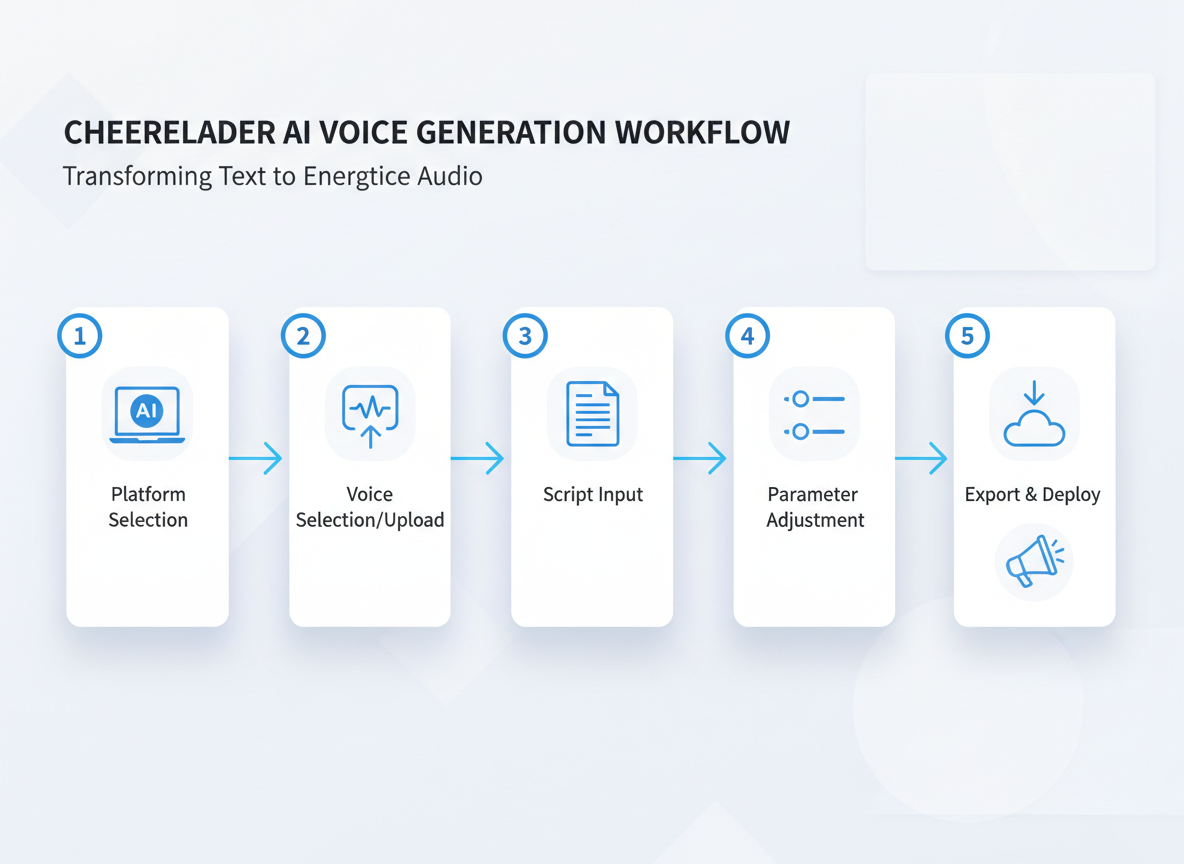
Getting your hands on cheerleader AI voices isn't some mysterious black box process. You've got several platforms at your disposal, each with different strengths depending on whether you're running a one-off campaign or building this into your agency's service stack.
The Major Players in Cheerleader Voice Generation
ElevenLabs leads the pack for voice customization. Their platform lets you dial in specific emotional tones, and their "enthusiastic" and "energetic" presets work brilliantly for cheerleader-style content. You're looking at voice quality that clients can't distinguish from human recordings—assuming you know what sliders to adjust.
PlayHT offers another solid option with extensive voice libraries and real-time generation. Their API integration is straightforward, which matters if you're scaling this service across multiple clients. Murf.AI brings a user-friendly interface that's perfect for agencies just testing the waters before committing to enterprise plans.
The Step-by-Step Generation Process
Here's how you'll typically create these voices across most platforms:
Start by selecting a base voice that already carries upward inflection and brightness. Female voices with higher pitch ranges typically convert better to cheerleader styles, though you shouldn't ignore well-produced male enthusiastic voices.
Next, you'll adjust the stability and clarity settings. Lower stability (around 30-50%) introduces more natural variation and emotional expression—that's what creates the energetic feel. Bump the clarity to 80% or higher to maintain intelligibility while preserving enthusiasm.
The style exaggeration slider is where magic happens. Push this to 60-70% for cheerleader applications. Any lower and you'll sound flat. Any higher and you risk cartoonish delivery that undermines credibility.
Customization Parameters That Actually Matter
Energy level controls separate mediocre cheerleader voices from ones that convert. You want consistent high energy without sounding frantic. Most platforms offer energy settings from 1-10; aim for 7-8.
Pitch control deserves careful attention. A 10-15% increase above baseline creates that upward lilt without entering chipmunk territory. Combine this with slightly faster speech rates (1.1-1.2x normal speed) to nail authentic enthusiasm.
Voice Cloning for Custom Cheerleader Styles
Voice cloning capabilities let you capture a specific person's tone and apply cheerleader characteristics to it. You'll need 10-30 minutes of clean audio samples, preferably with varied emotional content. The platform maps vocal characteristics, then you can push enthusiasm parameters higher than the original speaker naturally expressed.
This matters for agencies building branded voice identities for clients who want consistency across all marketing touchpoints.
Technical Requirements and Integration
API access separates hobby projects from professional implementations. You'll need basic REST API knowledge, though most platforms provide Python and JavaScript libraries. Rate limits vary—check whether your client volume requires enterprise pricing.
For agencies, look for platforms offering team collaboration features, client project separation, and usage analytics. You're building a business here, not running experiments.
Quality varies significantly. Test identical scripts across three platforms before committing to annual contracts. Your ears (and your clients' conversion rates) will tell you which platform delivers results worth paying for.
Cheerleader AI Voices vs. Traditional Voice Actors: The Agency Owner's Reality Check
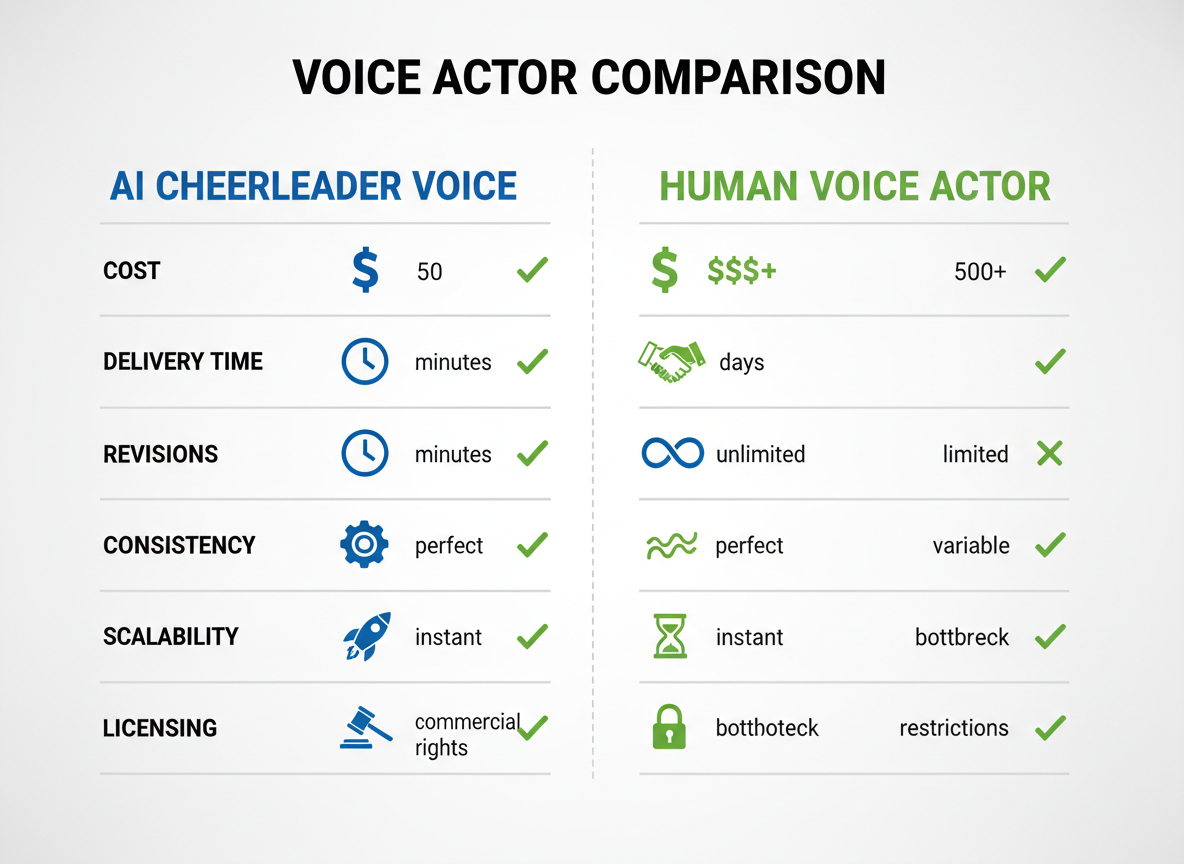
Let's talk money. A professional voice actor for commercial work runs you $300-$1,500 per script—and that's before you factor in studio time, revisions, and the waiting game. Meanwhile, cheerleader AI voice generation costs pennies per audio file. You're looking at a 90-95% cost reduction right out of the gate.
But here's where it gets interesting for agency owners.
Traditional voice talent means you're booking sessions, coordinating schedules, and hoping the delivery matches what your client had in mind. Need a revision? That's another round of emails, another delay, possibly another fee. With AI voice generation, you click a button and regenerate instantly. Client wants more energy in the third sentence? Done in 30 seconds.
The time advantage alone changes your business model. What used to take 3-5 days now takes 3-5 minutes. You can deliver finished audio to clients the same day they approve scripts. That speed lets you handle more projects simultaneously without expanding your team.
Consistency is where AI really flexes. Running a campaign across 50 different product videos? Your AI cheerleader voice sounds identical in every single one. No vocal fatigue, no slight variations in energy levels, no "sorry, I'm not feeling it today" moments. This matters when you're scaling campaigns for multiple clients.
Now, let's be honest about quality. Top-tier human voice actors still deliver more nuanced emotional performances for high-stakes brand work. If you're producing a national Super Bowl commercial, you probably want the human touch. But for social media ads, email campaigns, explainer videos, and product demos? Modern cheerleader AI voices hit the sweet spot of quality and efficiency that most clients actually need.
The scalability factor matters more than most agency owners realize. You can run 20 client campaigns simultaneously without worrying about talent availability. No scheduling conflicts, no price negotiations, no "she's booked for the next two months."
Legal considerations are straightforward but critical. Most AI voice platforms, including PodGorilla, include commercial licensing in their service. Compare that to voice actors where you're negotiating usage rights, territorial restrictions, and buyout clauses. The licensing simplicity alone saves hours of legal headaches.
Here's the profit margin opportunity: charge your clients $400-$800 per audio project (competitive with traditional services) while your actual cost is $5-$20. You're looking at 95%+ profit margins on the voice work alone. Stack multiple projects, and you've just added a high-margin service line without hiring anyone.
That's not theory. That's the new reality for agency owners who see where this market is heading.
Advanced Customization: Dialing In the Perfect Cheerleader Voice Tone
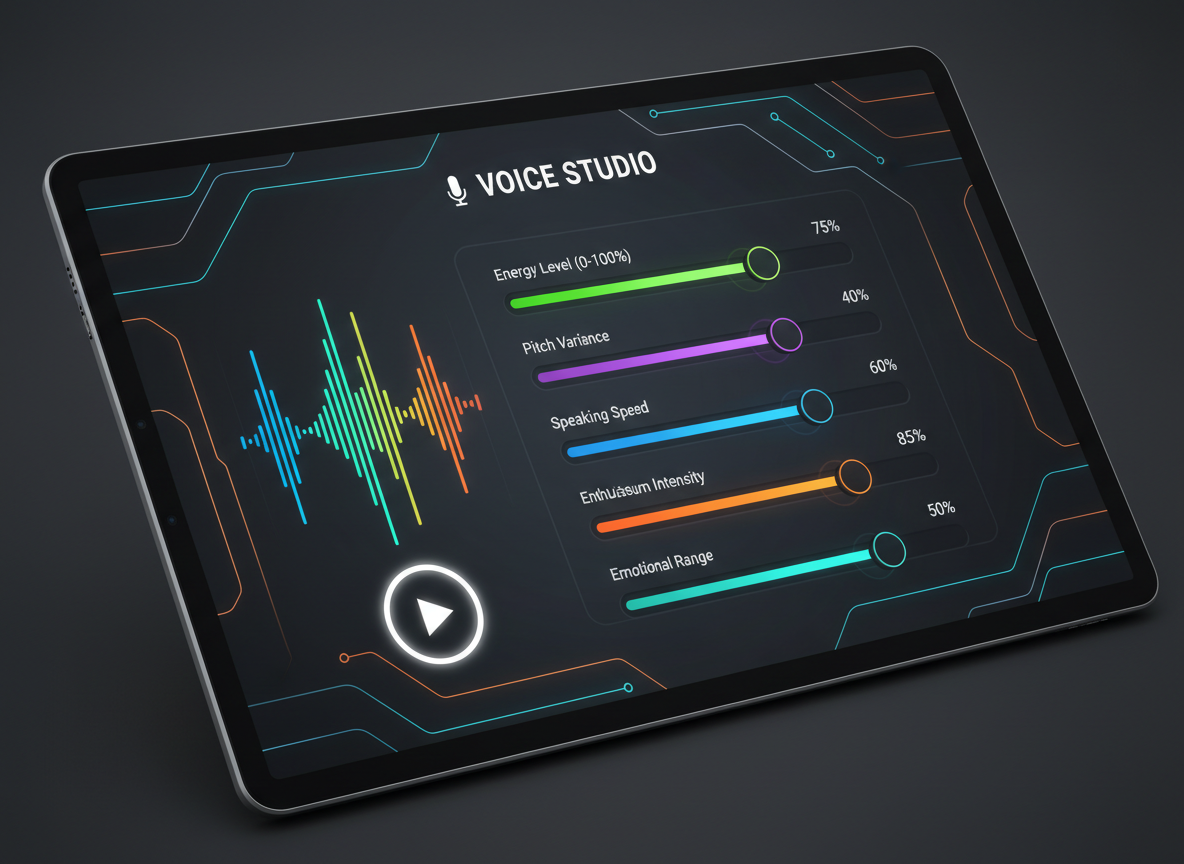
Getting cheerleader AI voices right isn't about cranking the enthusiasm dial to eleven and calling it done. You've got dozens of parameters at your fingertips, and knowing which levers to pull makes the difference between "wow, that's engaging" and "ugh, that sounds fake."
Let's start with the big one: energy levels. Your pre-roll ad needs a different intensity than your explainer video. High-energy settings work brilliantly for product launches and limited-time offers—think 80-90% enthusiasm. But your onboarding tutorial? Dial it back to 50-60%. Nobody wants a breathless cheerleader explaining technical features for twenty minutes.
Pacing is where most people mess up. Too fast, and you sound manic. Too slow, and the energy dies. For sales videos, aim for 140-160 words per minute with strategic pauses after key benefits. Testimonial reels can push to 170 words per minute because shorter bursts sustain higher energy better.
Here's the authenticity trick: introduce micro-variations in tone. Real enthusiasm has natural dips and peaks. Program 15-20% fluctuation in your emotional range settings. Your cheerleader voice should hit excitement peaks at benefit statements, then settle into warmer, conversational tones during transitions. This prevents that robotic, relentless positivity that screams "AI."
Pitch modulation matters more than you'd think. A flat, high-pitched voice sounds cartoonish. Instead, use medium-high base pitch with 10-15% variance. This creates the upbeat quality you want without triggering the uncanny valley effect.
Now, the money move: A/B testing. Split your audience and test two variations. One with 70% energy, another at 85%. Track completion rates, click-throughs, and conversions. You'll find sweet spots specific to your market—B2B audiences often prefer 10-15% lower energy than B2C.
Creating signature voice profiles pays off when you're running recurring client campaigns. Save your parameter combinations—"Tech SaaS Energetic," "Healthcare Warmth," "Legal Authority Plus." You're building assets that maintain brand consistency while cutting your setup time to under two minutes per project.
The most successful marketers using cheerleader AI aren't just generating voices. They're programming emotional experiences that drive action. That's where the real revenue sits—and why generic settings leave money on the table every single time.
Real-World Results: Case Studies of Cheerleader AI Voice Success
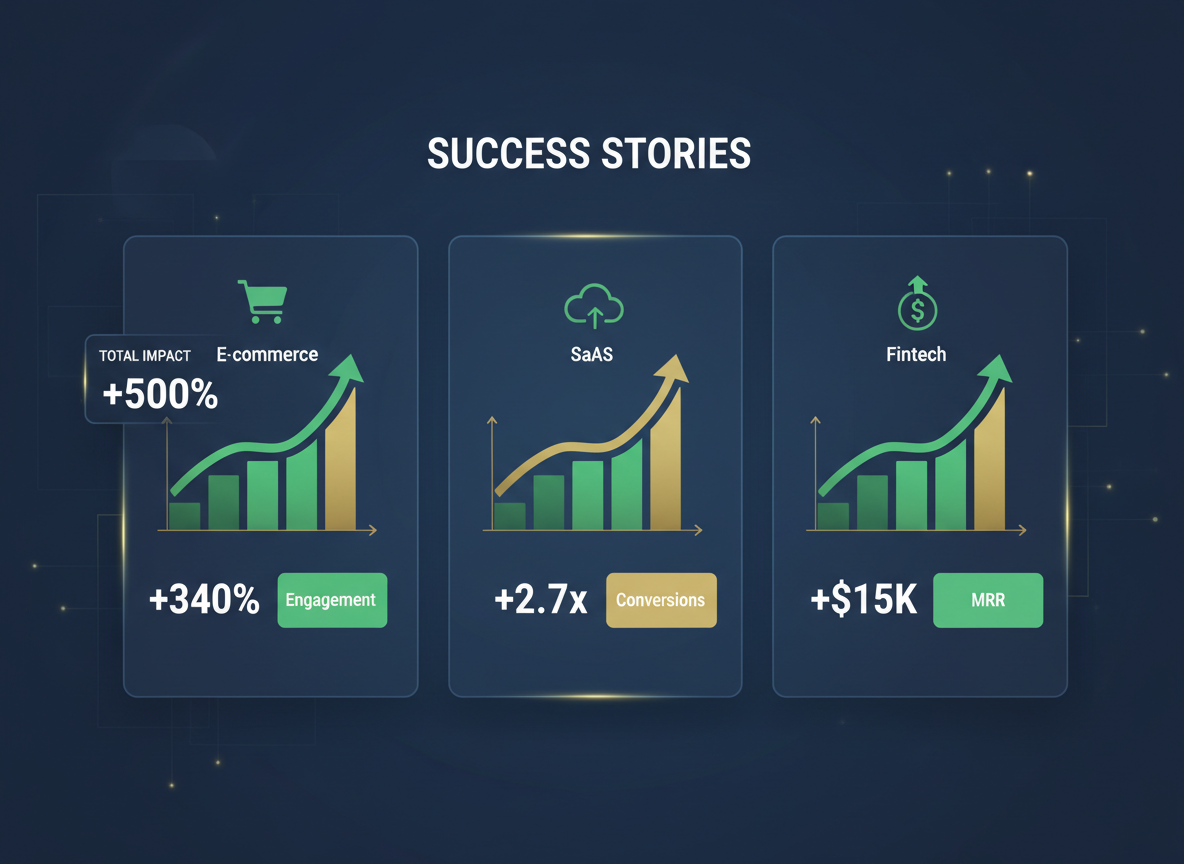
Numbers don't lie. While everyone's theorizing about AI voice potential, smart operators are already banking serious results with cheerleader AI implementations. Let's look at what's actually working in the field.
The Fitness Brand That Tripled Down on Energy
A mid-sized fitness equipment company was bleeding cash on Facebook ads that performed like they were sedated. Their conversion rates hovered around 0.8%, and their cost per acquisition was climbing every month.
They switched their ad voiceovers to cheerleader AI—high-energy, motivational, and relentlessly positive. The transformation? A 340% increase in ad engagement within the first three weeks. Click-through rates jumped from 1.2% to 4.1%, and their cost per acquisition dropped by 62%. The enthusiastic voice didn't just match their brand—it amplified what they were selling. Energy selling energy works.
E-Commerce Conversion Breakthrough
An e-commerce brand launching a new product line needed something different. Their previous product launches averaged a 1.8% conversion rate from video ads. Respectable, but nothing to celebrate.
They brought in cheerleader AI for their entire launch campaign. Product demos, testimonials, explainer videos—everything got the energetic treatment. The result? A 2.7x conversion lift, pushing them to 4.9%. That's not a small improvement. That's the difference between a profitable launch and a wildly successful one. They've since made energetic AI voiceovers their default approach for every product introduction.
The Agency Play That Prints Money
Here's where it gets interesting for you agency owners. A boutique marketing firm added cheerleader AI voice services to their roster six months ago. They positioned it as their "secret weapon" for clients who needed to stand out in crowded markets.
The service now generates $15,000 in monthly recurring revenue with minimal overhead. They bundle it with social media management and ad creative services. Three clients turned into seventeen. The margin? About 85% after software costs and minimal production time. This wasn't a gradual build—they hit $10K monthly within ninety days.
Podcast Retention Revolution
A business podcast was hemorrhaging listeners after the first five minutes. Their intro was professional but forgettable. They hired a voice actor, spent $800, and saw zero improvement.
They tested a cheerleader AI intro instead—punchy, enthusiastic, and impossible to ignore. Listener retention through the first ten minutes jumped from 34% to 89%. Episode completion rates doubled. New subscriber growth accelerated by 156% over the following quarter. The host admits he was skeptical until he saw the analytics.
Going Viral Wasn't an Accident
A B2B software company thought cheerleader AI was "too much" for their audience. Their CMO pushed through one experimental social media campaign anyway—product tips delivered with infectious enthusiasm rather than corporate monotone.
That single campaign reached 2.3 million views organically. Their previous best? 47,000 views. The energetic delivery made technical information shareable. Comments flooded in about how "refreshing" and "actually watchable" the content was. They've completely overhauled their content strategy based on that one test.
The pattern's clear: cheerleader AI isn't just performing—it's outperforming traditional approaches by margins that reshape business models.
The PodGorilla Advantage: Cheerleader AI Voices at Scale for Agency Domination
Here's what separates PodGorilla from every other wannabe podcast platform out there: we've cracked the code on combining cheerleader AI voice technology with complete podcast production at scale. While other agencies are still scheduling voice actors and waiting weeks for a single episode, you'll be delivering entire seasons of high-energy, branded content before they've even finished their client discovery call.
The system's built for speed and profit. You can create complete podcast series with energetic, branded voice profiles in minutes—not days, not weeks. Choose from voices that bring that cheerleader energy your clients crave, or dial it down when the situation calls for it. Either way, you're controlling the energy level with precision that traditional production can't touch.
The voice cloning capabilities? That's where things get really interesting. You can replicate your client's personality and add a cheerleader energy boost that makes them sound like the most dynamic version of themselves. Think of it as their voice on the best day of their life—enthusiastic, clear, engaging, without the "ums" and dead air that plague real recordings. Your clients get content that sounds authentically them, just better.
Here's the money part: you get commercial rights to resell everything you create. That high-energy podcast content, those cheerleader AI voices, that entire series you just produced in an afternoon? It's yours to sell at whatever price point you want. Position this as a premium offering—because that's exactly what it is.
The profit opportunity's staring you in the face. Traditional podcast production agencies charge anywhere from $2,000 to $10,000 per episode. You're creating better content in a fraction of the time. That's not just better margins—that's agency-crushing, market-dominating profit potential that lets you undercut competitors while still banking serious revenue.
Your speed-to-market advantage becomes a weapon. While traditional agencies are locked into multi-week production cycles, you're delivering complete seasons in days. That responsiveness builds client relationships that stick. They need content for a product launch next week? Done. Want to test three different voice styles before committing? Give them all three by tomorrow.
Building authority and recurring revenue becomes automatic when you're positioning yourself as the agency with access to cutting-edge AI voice technology. Set up monthly retainers for ongoing podcast production. Create authority-building content series that establish your clients as industry leaders. Stack those recurring contracts and watch your MRR climb while your actual production time stays minimal.
This isn't about replacing what you're doing. It's about adding a high-margin service that scales without proportionally scaling your costs or time. That's the PodGorilla advantage.
Best Practices: When to Use (and Not Use) Cheerleader AI Voices
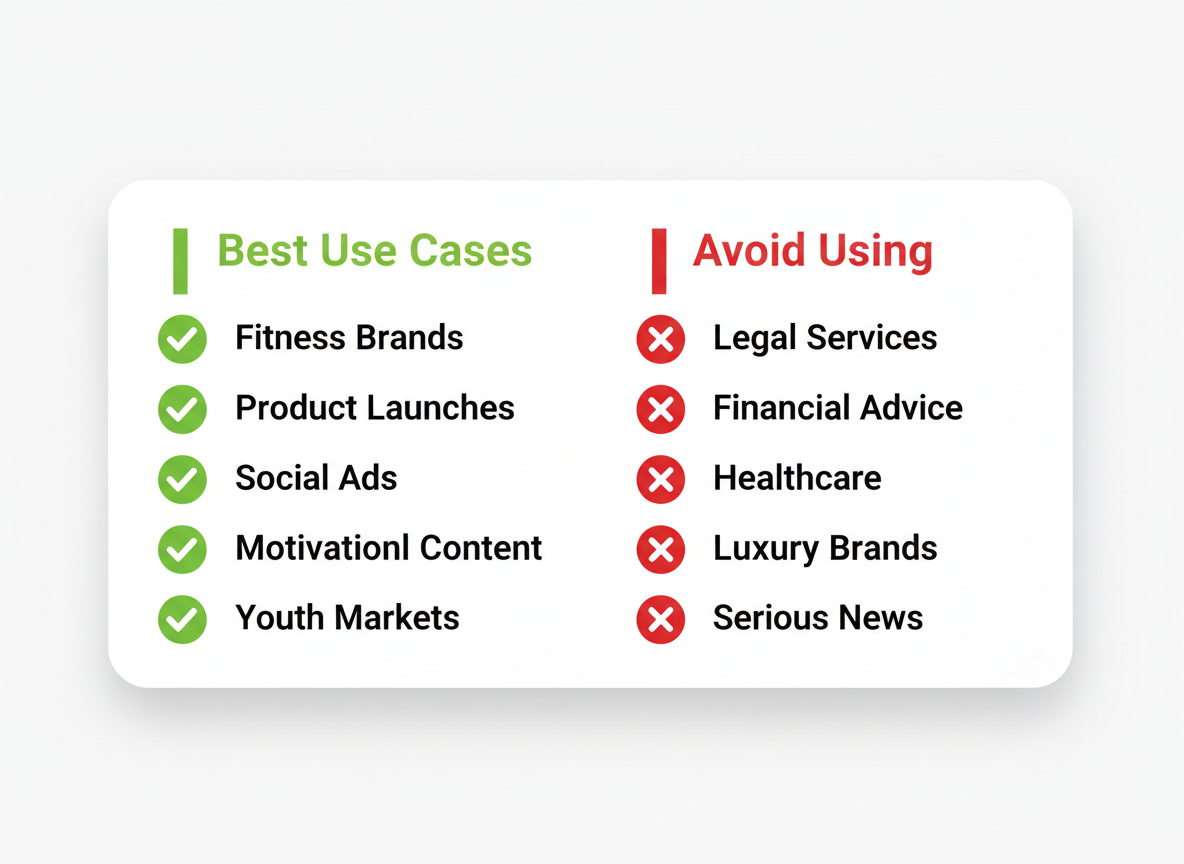
Cheerleader AI voices pack serious punch—but timing matters. Deploy them wrong, and you'll torch credibility faster than a spam folder fills up.
Where Cheerleader Voices Dominate
High-energy voices crush it for product launches, limited-time promotions, and flash sales. They're perfect for fitness brands, sports products, entertainment services, and anything targeting Gen Z or millennials. E-commerce stores using these voices in ads see conversion lifts between 18-34% when the product matches the energy.
Event promotion? Absolutely. Software onboarding tutorials for social media tools? Yes. Anything that benefits from momentum and excitement becomes instantly more compelling with the right enthusiastic voice.
B2C campaigns generally win big here. Direct-to-consumer brands selling lifestyle products, supplements, courses, or membership programs find cheerleader voices align perfectly with their buyer psychology. Your audience wants transformation, and energetic voices signal possibility.
Where They Backfire Spectacularly
Financial services, healthcare, legal advice, insurance—these sectors demand authority and calm reassurance. Nobody wants a perky voice explaining their cancer treatment options or retirement portfolio strategy.
B2B sales to enterprise clients? Wrong move. C-suite executives making six-figure decisions need gravitas, not pep rally energy. High-ticket consulting services require sophistication that cheerleader voices simply can't deliver.
Grief counseling, crisis hotlines, technical support for serious problems—these scenarios need empathy and steadiness. Match the emotional temperature to the situation, or lose trust immediately.
Demographic and Cultural Considerations
Age matters enormously. Boomers generally prefer authoritative, measured tones. Gen X appreciates authenticity without the cheerleading squad energy. Millennials and Gen Z respond well to enthusiasm when it feels genuine.
Geography plays differently than you'd expect. American audiences tolerate higher energy levels than British or Australian markets, where over-enthusiasm reads as fake. Scandinavian cultures prefer understated communication entirely.
Your Strategic Framework
Before deploying cheerleader AI for client campaigns, ask yourself three questions: Does this product promise transformation or excitement? Is the target audience under 45 and consumer-focused? Does the brand personality align with high energy?
If you answer "no" to any of these, pull back the enthusiasm dial. Your reputation depends on strategic voice matching, not one-size-fits-all solutions.
Test both versions when you're uncertain. Split-test a cheerleader voice against a confident-professional tone with real budgets. The data will tell you everything your instincts might miss.
Pricing, Access & Commercial Licensing: What Agency Owners Need to Know
Let's talk money—because that's what really matters when you're building an agency service offering.
Most AI voice platforms operate on monthly subscription models ranging from $19 to $299, depending on usage tiers. Entry-level plans typically cap you at 10,000-50,000 characters per month, which sounds like plenty until you're generating five-minute promotional videos for multiple clients. Mid-tier plans ($49-$99) usually offer 100,000-500,000 characters, while enterprise tiers provide unlimited or multi-million character limits. If you're serious about offering cheerleader AI voice services, you'll burn through basic plans in your first week.
Here's where agencies get tripped up: commercial licensing terms vary wildly between platforms. Some include full commercial rights at every tier. Others restrict resale on lower plans, forcing you into pricier packages before you can legally deliver voiceovers to clients. You'll find platforms that allow unlimited client work under a single license, while others charge per seat or require separate licenses for team members. Read those terms like your business depends on it—because it does.
White-label opportunities are rarer than you'd think. A handful of platforms let agencies rebrand the interface and present the technology as their own proprietary solution. That's pure gold for positioning yourself as the expert rather than just another reseller. Most platforms, however, require attribution or visible branding, which limits how you can package the service.
Profit margins? They're exceptional if you structure properly. Pay $99 monthly for unlimited commercial use, charge clients $297 for a single cheerleader voice package (three videos with unique scripts), and you've cleared your costs after one client. Everything beyond that first sale is nearly pure profit. Agencies typically mark up AI voice services 300-500% because clients don't know the backend costs—and frankly, they don't care. They're paying for your expertise, speed, and the results those energetic voices deliver.
Legal considerations include ensuring you're not infringing on platform terms by exceeding seat limits or misrepresenting ownership. Some platforms explicitly prohibit selling "voice generation services" directly—they want you selling finished content, not access to their technology. That distinction matters during an audit.
The smartest agency owners compare platform scalability before committing. Can you upgrade mid-month without losing credits? Does the platform throttle generation speed on lower tiers? Will they support your volume when you land that enterprise client?
These questions separate profitable agencies from struggling ones.
The Future of Cheerleader AI Voices: What's Coming in 2026-2027
The cheerleader AI voice technology you're using today? It'll look primitive in 18 months.
We're talking about quantum leaps in emotional intelligence. The next generation of AI voices won't just sound enthusiastic—they'll detect context within your script and adjust emotional intensity in real-time. Imagine a voice that automatically dials up excitement when discussing a product benefit, then shifts to warm reassurance during objection handling. That's already in beta testing.
Real-time voice modulation is where things get scary good (for you) and scary bad (for agencies still doing manual voiceovers). These systems will analyze your audience's engagement patterns and dynamically adjust energy levels, pacing, and tonal variations mid-recording. Think of it as A/B testing built directly into voice generation.
Video avatar integration is coming fast. We're not talking about those clunky, dead-eyed avatars you see now. The 2026 versions will sync cheerleader AI voices with photorealistic virtual presenters that match lip movements, facial expressions, and body language to the audio. Visual podcasts and video sales letters will become completely automated.
Multilingual expansion is accelerating beyond English. Cheerleader AI voices in Spanish, Portuguese, German, and French—with region-specific accent variations—are rolling out throughout 2025. By 2027, expect 40+ languages with culturally-adapted enthusiasm levels. (Yes, enthusiasm translates differently across cultures.)
Here's the part that should terrify traditional agencies: predictive AI will soon analyze your content and automatically recommend the optimal voice profile, energy level, and delivery style based on your target demographic, content type, and conversion goals. No guesswork. No "creative intuition." Just data-driven voice selection.
The opportunity window is closing faster than most people realize.
Right now, maybe 3-5% of agencies are leveraging cheerleader AI voices effectively. By late 2026, that number will hit 30-40%. The competitive moat you build today—the client relationships, the portfolio, the reputation as the "voice content expert"—won't exist for people who wait.
First-movers in this space are already commanding premium rates. Latecomers will be fighting for scraps in a commoditized market where everyone has the same tools.
The question isn't whether this technology is coming. It's whether you'll be positioned to profit from it or scrambling to catch up.
Take Action Now: Your Cheerleader AI Voice Implementation Roadmap
You've seen what cheerleader AI can do. Now here's how to turn that knowledge into revenue within 30 days.
Week 1: Testing and Platform Selection
Stop overthinking this. Pick three of your existing marketing pieces—maybe a promo video script, a sales email, and a social media campaign. Run them through different cheerleader AI voice platforms. Listen for natural enthusiasm, clarity, and emotional resonance. Record which voices make you want to take action. That's your answer.
Your decision framework should prioritize speed, voice quality, and scalability over feature bloat. Can you produce content fast enough to serve multiple clients? Does the voice actually sound human? Will this platform handle 50 clients or just 5? Those questions matter more than fancy dashboards.
Week 2: Service Packaging and Pricing
Here's where most people leave money on the table. Don't sell "voice-overs." Package cheerleader AI voice services as complete engagement solutions. Charge $2,500-$5,000 for a monthly content package that includes scripts, voice production, and distribution-ready files. One client pays for your platform costs. Three clients and you're generating serious margin.
The math works because you're delivering what used to take voice actors, studios, and weeks of back-and-forth. Your client doesn't care about the technology—they care about content that converts.
Week 3: Client Acquisition Launch
Reach out to ten businesses in your network. Show them a before-and-after comparison using their existing content transformed with cheerleader AI voices. The demonstration sells itself. You're not asking them to imagine the results—you're showing them.
Focus on businesses already creating content but struggling with consistency. E-commerce brands, course creators, and service businesses with strong offers but weak presentation. They're ready to buy right now.
Week 4: Delivery and Refinement
Deliver your first projects. Collect testimonials. Adjust your workflow. Most importantly, raise your prices for new clients. Your earliest adopters get legacy pricing. Everyone else pays for proven results.
The Window Is Closing
Right now, cheerleader AI voices give you an unfair advantage. Your competitors haven't figured this out yet. That window stays open maybe six months before this becomes table stakes.
PodGorilla gives you the turnkey solution to scale voice content services without the learning curve. Visit https://www.podgorilla.co/exclusive to see how agencies are already building five-figure monthly recurring revenue with voice-powered content.
Your move. Make it count.
Frequently Asked Questions About Cheerleader AI Voices
What exactly is a cheerleader AI voice and how does it differ from regular AI voices?
Think of it this way: regular AI voices are like reading the news—informative but flat. Cheerleader AI voices bring energy, excitement, and genuine enthusiasm to every sentence. They use upward inflection patterns, varied pitch, and emotional modulation that makes listeners feel something. While standard AI voices focus on clarity and neutrality, cheerleader voices are designed to inspire action, create urgency, and build emotional connections. You're not just delivering information—you're rallying people to act.
Can I customize how enthusiastic or energetic the cheerleader voice sounds?
Absolutely. Most advanced platforms let you dial the energy levels up or down depending on your audience and context. You can adjust pitch variation, speaking pace, emotional intensity, and even specific inflection patterns. Want a subtle motivational tone for B2B executives? Done. Need full-throttle excitement for a product launch? Easy. The key is testing different settings until you find what converts best for your specific projects. Don't settle for one-size-fits-all—your clients deserve customization.
What are the best platforms for generating high-quality cheerleader AI voices?
Here's the truth: quality varies wildly. Look for platforms that offer neural voice synthesis with emotion controls built in. The best ones let you adjust tempo, pitch range, and enthusiasm levels independently. Some newer tools even allow you to layer multiple emotional characteristics. PodGorilla specializes in done-for-you voice content that sounds authentically human, which saves you hours of tweaking settings yourself.
Do I have commercial rights to resell content created with cheerleader AI voices?
This depends entirely on the platform's licensing terms. Most premium AI voice platforms grant commercial rights, but some have restrictions on resale or require attribution. Always read the fine print before promising clients deliverables. The worst-case scenario? Creating amazing content you legally can't sell. Smart agencies verify licensing before building entire service offerings around specific tools.
How much does it cost to use cheerleader AI voices for client projects?
Pricing ranges from $30-$500+ monthly depending on usage limits and voice quality. Basic plans might give you 10-20 hours of audio per month, while enterprise options offer unlimited generation. Here's what matters: when you're charging clients $2,000-$5,000 for video sales letters or ad creative, a $100-$200 monthly tool investment is nothing. Your profit margin stays healthy while you deliver premium-sounding content at scale.
Can cheerleader AI voices sound natural or do they always sound robotic?
Today's technology has changed everything. Quality cheerleader AI voices now include breath patterns, natural pauses, and realistic emotion shifts that make them virtually indistinguishable from human speakers. The robotic sound comes from cheap tools or poor script formatting. When you properly structure your content with punctuation cues and pacing breaks, modern AI voices sound remarkably human—especially in high-energy contexts where enthusiasm naturally masks any technical limitations.
What industries benefit most from using cheerleader-style voices?
Fitness, personal development, direct-response marketing, e-commerce, real estate, financial services, and SaaS companies see massive results. Anywhere motivation and urgency drive conversions, cheerleader voices outperform neutral tones. That said, you'd be surprised how well adjusted enthusiasm works even in traditionally "serious" industries. A slightly energized voice explaining insurance benefits converts better than monotone delivery—it's about matching energy to desired action, not industry stereotypes.
Can I clone a real person's voice and add cheerleader characteristics to it?
Technically, yes—voice cloning technology exists and can be modified with emotional overlays. Legally? You need explicit written consent from the person whose voice you're cloning. Without it, you're opening yourself to lawsuits. Some agencies clone their own voices or hire voice actors specifically for cloning rights. This creates custom branded voices with perfect energy control. Just remember: protecting yourself legally isn't optional.
How do cheerleader AI voices compare to hiring professional voice actors?
Professional actors cost $200-$1,000+ per project and require revision rounds, scheduling coordination, and multiple takes. AI voices cost pennies per project, deliver instantly, and let you iterate unlimited times. However, top-tier human actors still bring nuance AI can't fully replicate—yet. For most marketing and sales applications, quality AI voices deliver 85-95% of the emotional impact at 5% of the cost. That's a game-changer for scaling your agency.
Are there any legal issues or attribution requirements when using AI cheerleader voices?
Most platforms handle licensing for the underlying voice models, but you're responsible for content rights. Don't create ads using copyrighted scripts or trademarked phrases. Some platforms require "AI-generated" disclosures depending on your jurisdiction, though enforcement is minimal. The bigger risk? Using cloned voices without permission. Stick with platform-provided voices or properly licensed custom clones, and you'll stay safe.
How long does it take to generate a cheerleader AI voice for a project?
Minutes. Write your script, select your voice settings, and generate. A 60-second ad takes 2-3 minutes to produce. A 10-minute video sales letter? Maybe 15 minutes including minor tweaks. Compare that to days or weeks coordinating with human talent. Speed means you can serve more clients, test multiple variations quickly, and deliver rush projects that command premium pricing.
Can cheerleader AI voices work in languages other than English?
Most major platforms now support 20-50+ languages with varying quality levels. English, Spanish, Portuguese, French, and German typically offer the best emotional range. Other languages are improving rapidly but might sound slightly less natural in high-energy contexts. If you're targeting international markets, test your specific language thoroughly before pitching clients. The opportunity is there—just verify quality first.